
Track 1 Reflexes: Rewiring the Safety Switch
When the system’s on edge, Track 1 reflexes are the first to flip. These are the primal programs your client’s nervous system runs when it doesn't feel safe.
We’re talking:
-
Fear Paralysis Reflex (FPR)
-
Moro Reflex
-
Startle Reflex
-
STNR (Symmetrical Tonic Neck Reflex)
-
TLR (Tonic Labrythine Reflex)
These aren’t just “childhood leftovers.” They’re the deepest-coded layers of brainstem programming. And if they’re active in adults, they distort everything above them — breathing, movement, posture, even behavior.
Let’s break it down.
The Track 1 Reflexes — Rooted in Survival
These reflexes are sagittal-plane dominant. Translation: they affect midline tone, flexion/extension, and primal postural systems.
They’re the first on scene in development — and the last to let go under stress.
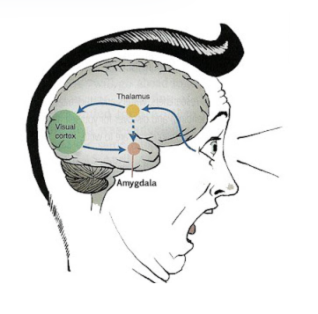
1. Fear Paralysis Reflex (FPR): The Freeze/Immobilsation Switch
-
Starts: In utero (~5 weeks)
-
Should Inhibit: By birth
-
Stuck Looks Like: Global shutdown, overwhelm, emotional paralysis
-
Trigger Clues: Procrastination, fatigue, chronic inhibition, dissociation
-
Often reactivated by: Early trauma or dorsal vagal dominance
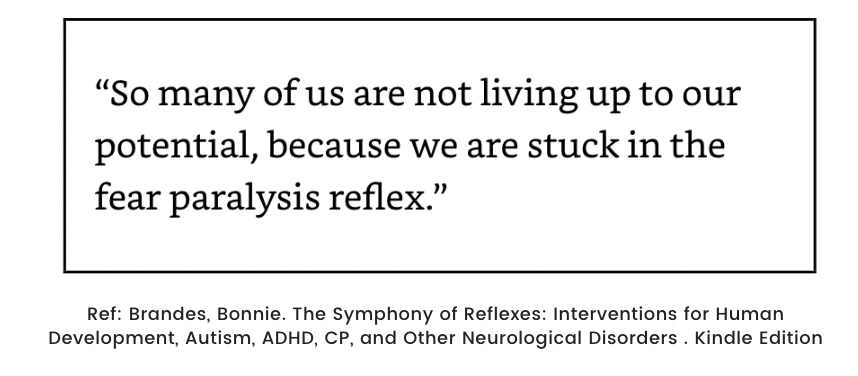
✅ FPR is the master switch of Track 1. Correct it, and you’ll often watch multiple reflexes collapse with it.
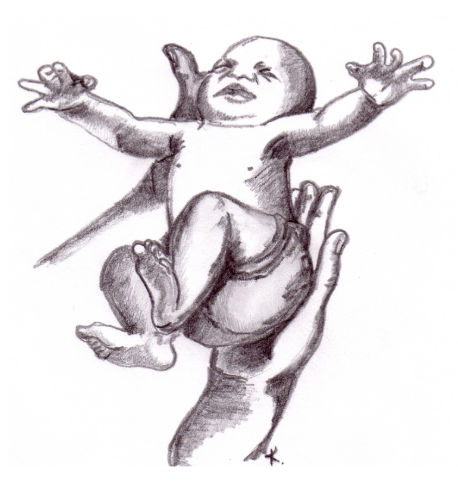
2. Moro Reflex: The Alarm Bell
-
The original Fight/Flight response.
-
Trigger: Sudden stimulus → brainstem sounds the alarm.
-
Retention Symptoms: Startle response, hyper-vigilance, poor adaptability, light/sound sensitivity
-
Breathing Impact: Inverted patterns, chest breathing, locked extensor muscles.
Retained Moro = perpetual "danger mode."
3. Startle Reflex: The Moro’s Backup Plan
-
Integrates after Moro but keeps flexing the body into “safe” curled-up mode.
-
Breathing Signature: Flexed posture, diaphragm inhibition, “ball-up” mechanics. This is an inverted breathing pattern.
-
Trigger: Similar to Moro — sudden head movement → shoulder extensors collapse.
Startle lives deep in the brainstem. If Moro is cleared but tension remains, check Startle.
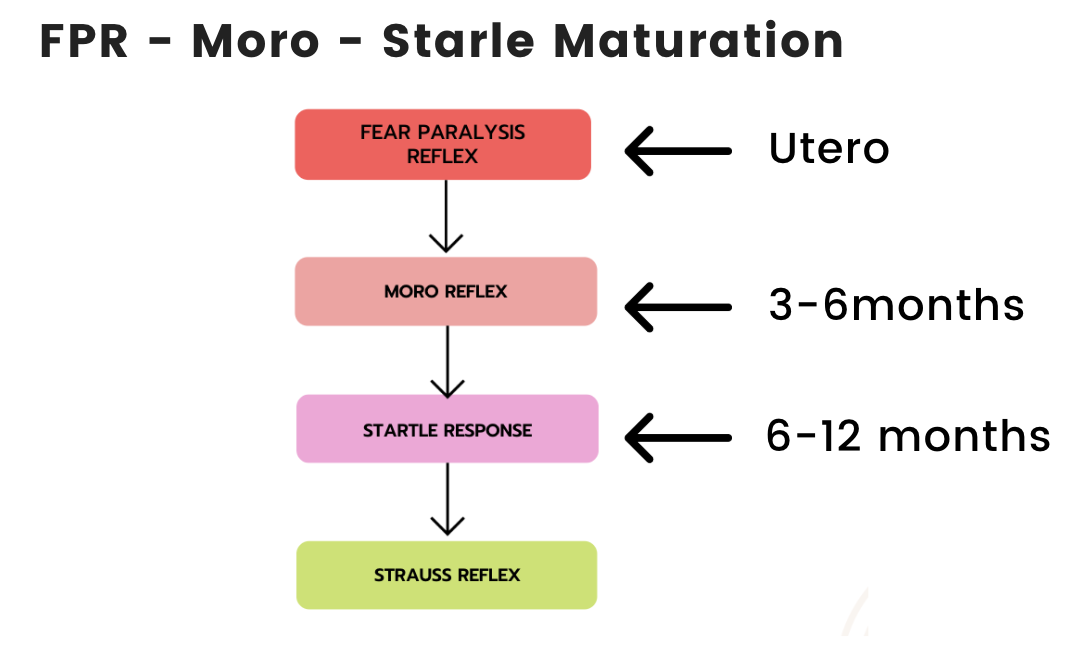
We need to view the Fear Paralysis, Moro, and Startle responses as three divisions of a single reflex arc. Fear Paralysis acts as the controller — when it’s active, either the Moro or the Startle reflex will also be active.
Crucially, only one of them — Moro or Startle — can be active at any given time, not both simultaneously.
When the Fear Paralysis Reflex is properly corrected, the associated Moro or Startle reflex will often self-correct automatically.
4. STNR: The Head–Body Divider
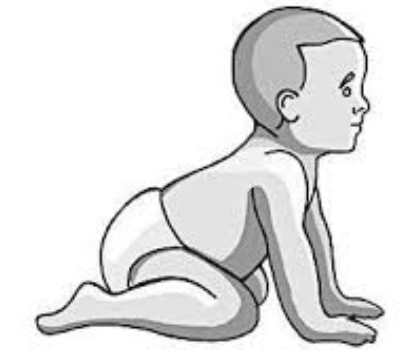
-
Appears: 6–9 months
-
Role: Teaches head-body dissociation (think crawling, coordination)
-
Dysfunction Looks Like: Poor posture, neck/back tension, coordination issues
STNR often surfaces in adults with neck/back pain and coordination issues — especially if they “crash” during movement integration.
5. TLR (Tonic Labyrinthine Reflex): The Gravity Filter
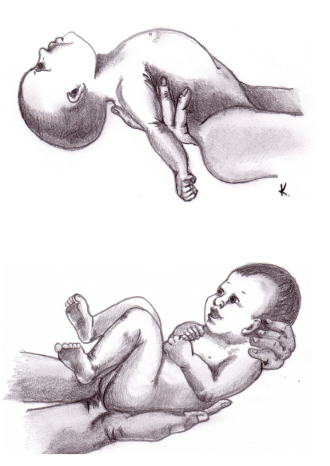
✅ Testing Tip: Place client in supine, flex or extend neck and lumbar spine. If all flexors/extensors inhibit — TLR is likely active.
-
Appears: At birth
-
Should Inhibit: By 3.5 years
-
Role: Regulates postural tone and vestibular balance in response to head position
-
Retention Signs:
-
Discomfort or disorientation during head flexion/extension
-
Poor balance or core engagement
-
Sensory overload during movement
-
Visual tracking difficulties
-
Left-right confusion or poor spatial awareness
-
🧠 TLR bridges vestibular input and postural output. If the head moves and the body can’t respond appropriately, suspect TLR.
🧪 Assessment Tip: With the client in supine, ask them to flex or extend both the neck and lumbar spine.
If all upper/lower flexors or extensors inhibit with that movement, you’ve likely found an active TLR.
⚙️ How to Prioritize in Track 1
Here’s the magic: You don’t need to correct all five Track 1 reflexes individually.
Most clients have a priority reflex that dominates the stack.
Start with that — and the others often resolve as collateral.
| Reflex | When to suspect it’s primary |
|---|---|
| FPR | Global shutdown, fatigue, freeze, overwhelm |
| Moro | Hypervigilance, anxiety, emotional reactivity |
| Startle | Inverted breathing, flexion-dominant tone |
| STNR | Neck/back compensation, poor cross-patterning |
| TLR | Vestibular issues, balance struggles, spatial disorientation |
This isn’t guesswork. Inside Functional NeuroHealth™, we test for priority via muscle inhibition — and trace the reflex loop to its stuck layer: input, processing, or output.
🧠 Clinical Wisdom
If your client seems “stuck in their head” — but their posture, breath, and movement don’t add up…
...they’re probably stuck in a Track 1 reflex pattern.
And until that’s cleared, all the mindset work in the world will feel like swimming upstream.
📚 Want to Learn the FNH Reflex Process?
If you’re reading this thinking, “How do I actually do this in clinic?” — you’re not alone.
The Primitive Reflex Process inside Functional NeuroHealth™ isn’t just theory — it’s a complete, repeatable system for assessing and correcting reflexes in real time.
✅ Identify priority reflexes
✅ Test for input vs processing vs output
✅ Apply the exact correction the nervous system asks for
✅ Re-assess instantly to confirm it worked
This process is taught in full inside our Foundations Program, and we go even deeper inside Primitive Reflex Mastery.
Choose Your Path:
🧠 Foundations Program — Your Intro to Functional NeuroHealth™
The most accessible way to start learning reflex integration, vagus + breath testing, muscle testing, and more.
-
Weekly live mentoring
-
Clinical tools you can use immediately
-
Cancel anytime
📌 $97/week | First week free
[→ Click here to join Foundations]
🔬 Primitive Reflex Mastery — The Deep Dive
Our flagship practitioner course for decoding retained reflexes with precision. No guesswork, no gimmicks — just neurological clarity.
-
Full FNH Primitive Reflex System
-
Priority mapping + real-time resets
-
Sensory + primal movement integration
💡 Investment: $1950 once-off
📲 To learn more, reply to this email with “REFLEX”
⚠️ Disclaimer
The information in this newsletter is intended for educational purposes only and is designed for trained health and wellness professionals. The assessments and interventions described are part of the Functional NeuroHealth™ framework and should only be applied within the scope of a practitioner’s professional training and licensure.
Always refer clients to appropriate medical or mental health professionals when needed. Results will vary depending on the individual and the context.

Responses