
Originally presented at the Virtual Neurology Summit 2024
VIDEO: Watch the Full Presentation
|

The Hidden Link Between Vertigo and Anxiety
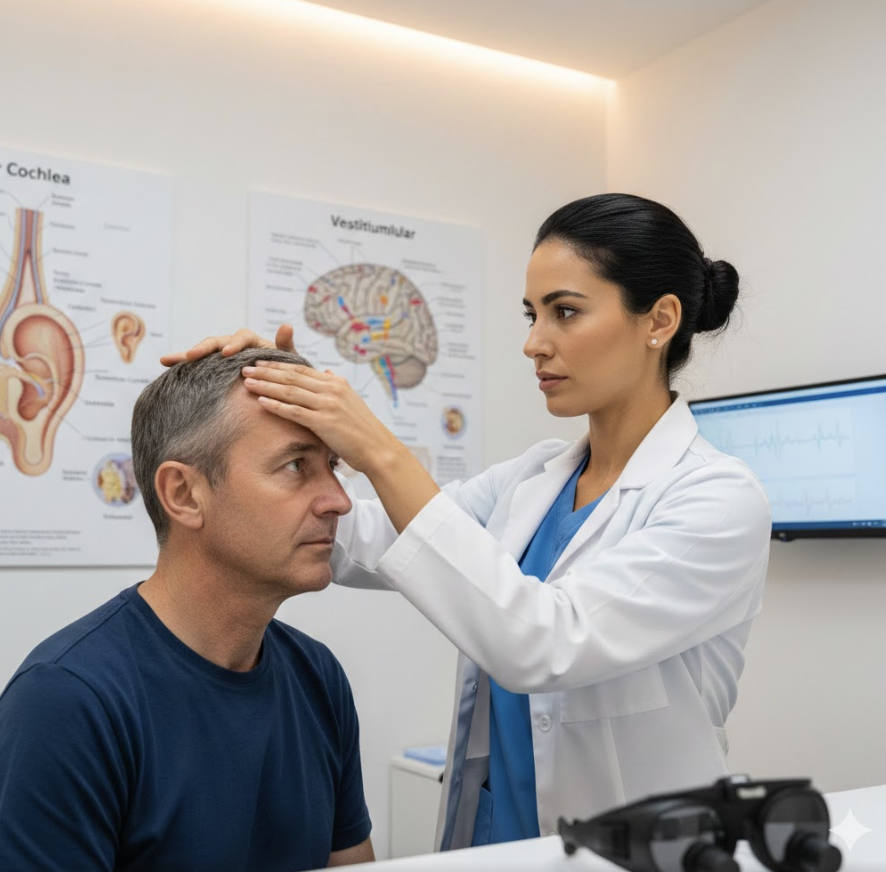
Did you know that 27% of vertigo patients experience anxiety? And the overall prevalence of vertigo and dizziness in the general population ranges from a staggering 20-56%.
If you're treating patients with chronic dizziness, you've likely encountered cases that don't respond to standard vestibular rehabilitation. The missing piece? Understanding the intricate relationship between the vestibular system, the immune system, and the limbic (emotional) brain.
In this comprehensive guide based on my presentation at the 2024 Virtual Neurology Summit, I'll share the clinical framework I've developed over 10,000+ hours of practice to help you identify and treat the three dominant types of vertigo: Positional, Immune, and Limbic.
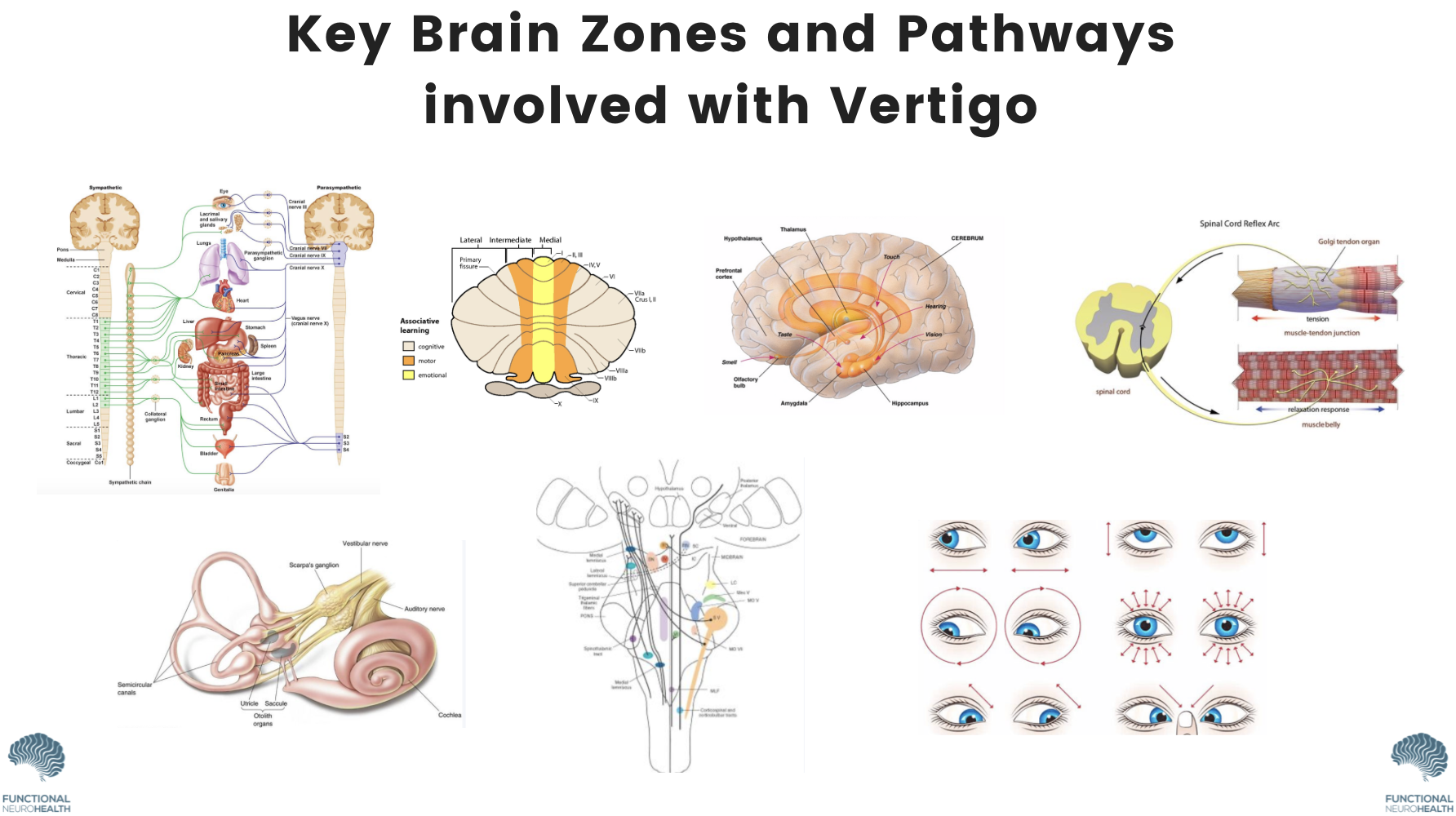
Key Brain Zones Involved in Vertigo
Before diving into the three types, let's review the critical pathways involved in vertigo presentations:
- Autonomic System - Sympathetic/parasympathetic disturbances
- Cerebellum - Coordination and balance processing
- Limbic System - Emotional processing and threat perception
- Mechanoreceptors - Musculoskeletal system inputs
- Vestibular System - Inner ear balance mechanisms
- Brainstem - Houses vestibular nuclei
- Ocular System - Eye movement control
- Cervical Stability - Head and neck position
The Three Types of Vertigo: A Clinical Framework
Most patients present with elements of all three types, but identifying the primary driver is key to clinical success.
1. Positional Dominant Vertigo
Characteristics:
- Position and acceleration of the head are perceived as threats by the nervous system
- Classic BPPV presentation
- Responds well to standard vestibular rehabilitation
Clinical Approach:
- Assess and correct vestibular system function
- Evaluate cerebellar pathways
- Check eye movements (pursuits, optokinetics, VOR)
- Examine cranial nerves (especially 1, 5, 8)
- Address cervical stability
- Integrate primitive reflexes first (Moro, ATNR, STNR, TLR, Landau)
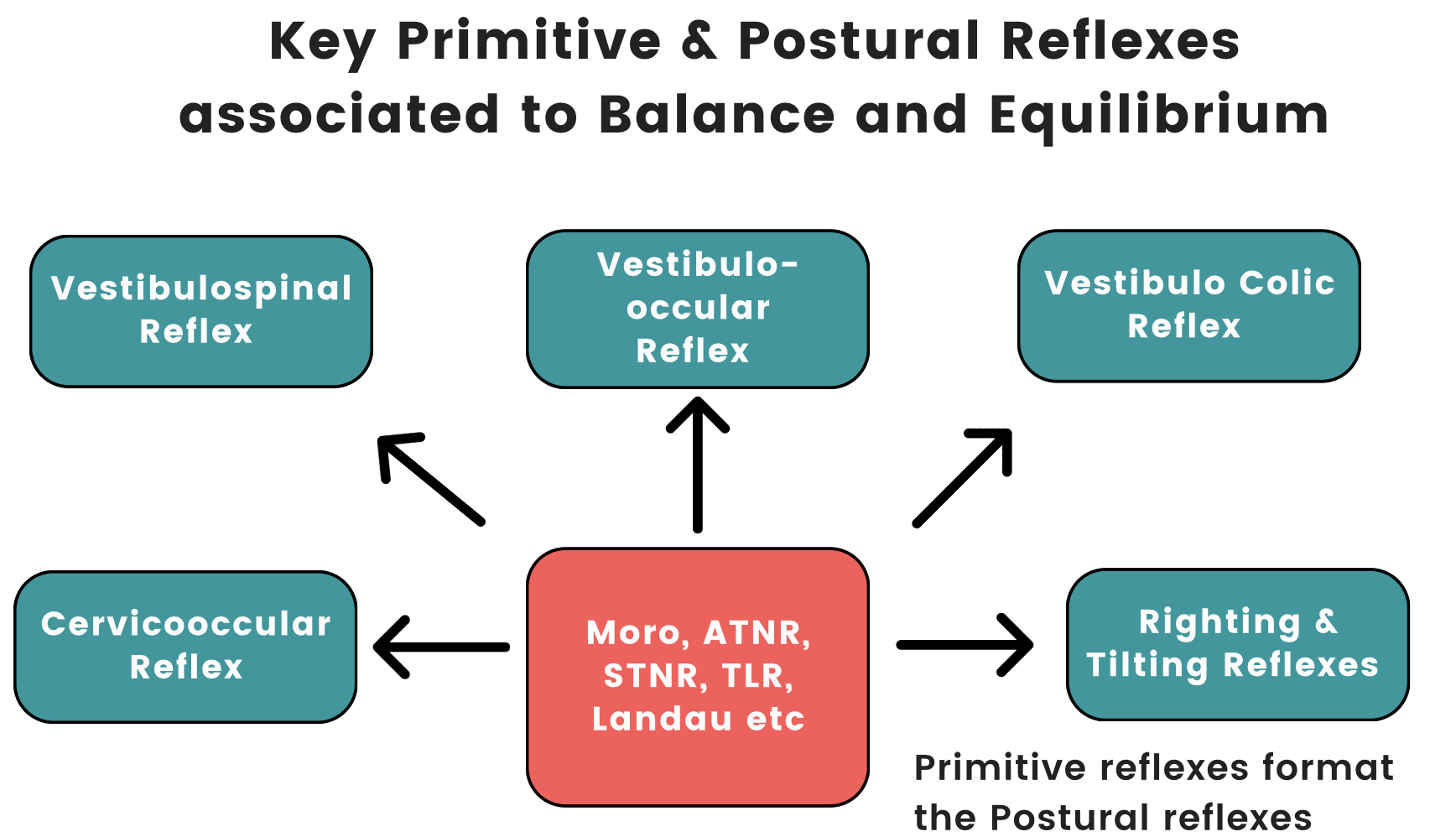
Why Primitive Reflexes Matter:
The brain develops primitive reflexes first for a reason - they format ALL other reflexes in our neurology. Years of clinical experience has taught me that if the brain chose to do these first, they must be critically important. These reflexes directly impact:
- Cervical-ocular reflex
- Vestibulospinal reflex
- Vestibulo-ocular reflex (VOR)
- Vestibulocolic reflex
- Righting and tilting reflexes
Case Study 1: Classic Positional Vertigo - One Session Resolution
Patient Profile:
- 38-year-old male
- Vertigo and dizziness for several weeks, unknown origin
- History of migraines
- Car accident 16 years prior
- Symptoms varied with eating (potential vagus nerve involvement)
- Minimal relief from standard chiropractic care
Assessment Findings:
- Fukuda step test: Slight left deviation
- Romberg's: Slight left tilt
- Fear Paralysis Reflex present (indicating Moro, TLR, STNR also present)
- Cranial nerve issues: CN 1, 5, 8
- Eye movement deficits in pursuits, optokinetics, and VOR
Treatment & Results:
- Corrected identified primitive reflexes
- Addressed cranial nerve dysfunction
- VOR drills (up, down, left, right)
- 50% improvement after first correction
- Full symptom resolution by end of first session
- Homework: VOR drills for ongoing stability
Key Takeaway: When the issue is primarily positional, results can be rapid (1-3 sessions) with proper primitive reflex integration and targeted neurological corrections.
Case Study 2: Severe Positional Vertigo - The Power of Precise Correction
Patient Profile:
- Female with severe vertigo for 3 years
- Worse when turning head to the left
- Had pursued functional medicine with no success
- Insisted it "wasn't positional" despite clear positional triggers
Assessment Findings:
- Purkinje cell lesion pattern on left side
- Left vestibular system overactive
Treatment & Results:
- VOR cancellation drill (specific technique to rebalance vestibular firing)
- Two repetitions only
- First time in 3 years she could turn left without severe vertigo
- Immediate, dramatic response
- Continued with stabilization protocol
Key Takeaway: Sometimes patients have done extensive work elsewhere, and they simply need the precise positional correction their nervous system has been waiting for.
2. Immune Dominant Vertigo
Characteristics:
- Underlying viral or bacterial infections
- Autonomic system dysregulation
- Hypertonic basal nuclei
- Rising prevalence post-COVID
Clinical Approach:
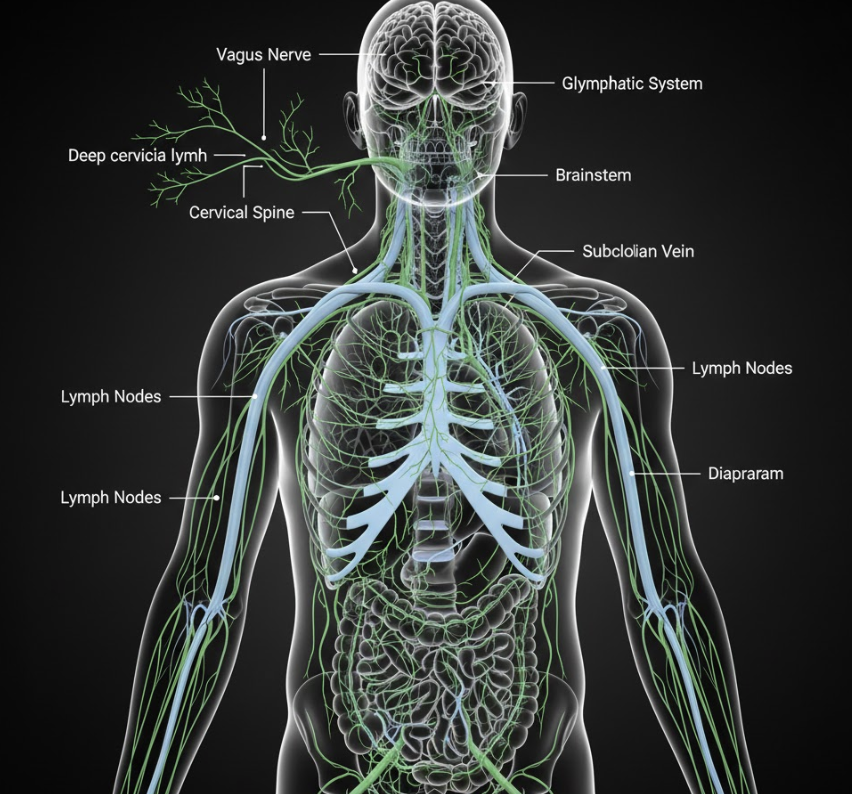
- Vagus nerve stimulation - The "master commander" of immune regulation
- Upper cervical stability (especially C1) - Critical for gut-brain axis
- Lymphatic mobilization - Ensure glymphatic drainage from brain
- Address hypertonic muscles compressing thoracic ducts (pec minors)
- Functional medicine protocols for immune balance (TH1, TH2, TH17)
Important Note: With immune-dominant vertigo, vagus nerve work is essential. However, if it's NOT immune-dominant, excessive vagus stimulation can actually worsen symptoms. Proper identification is crucial.
3. Limbic Dominant Vertigo - The Most Challenging
Characteristics:
- Conscious or subconscious emotional drivers and triggers
- Neurology tests stable, but symptoms persist
- Often seen in post-concussion cases
- Can last months to years after initial event
The Research Behind It:
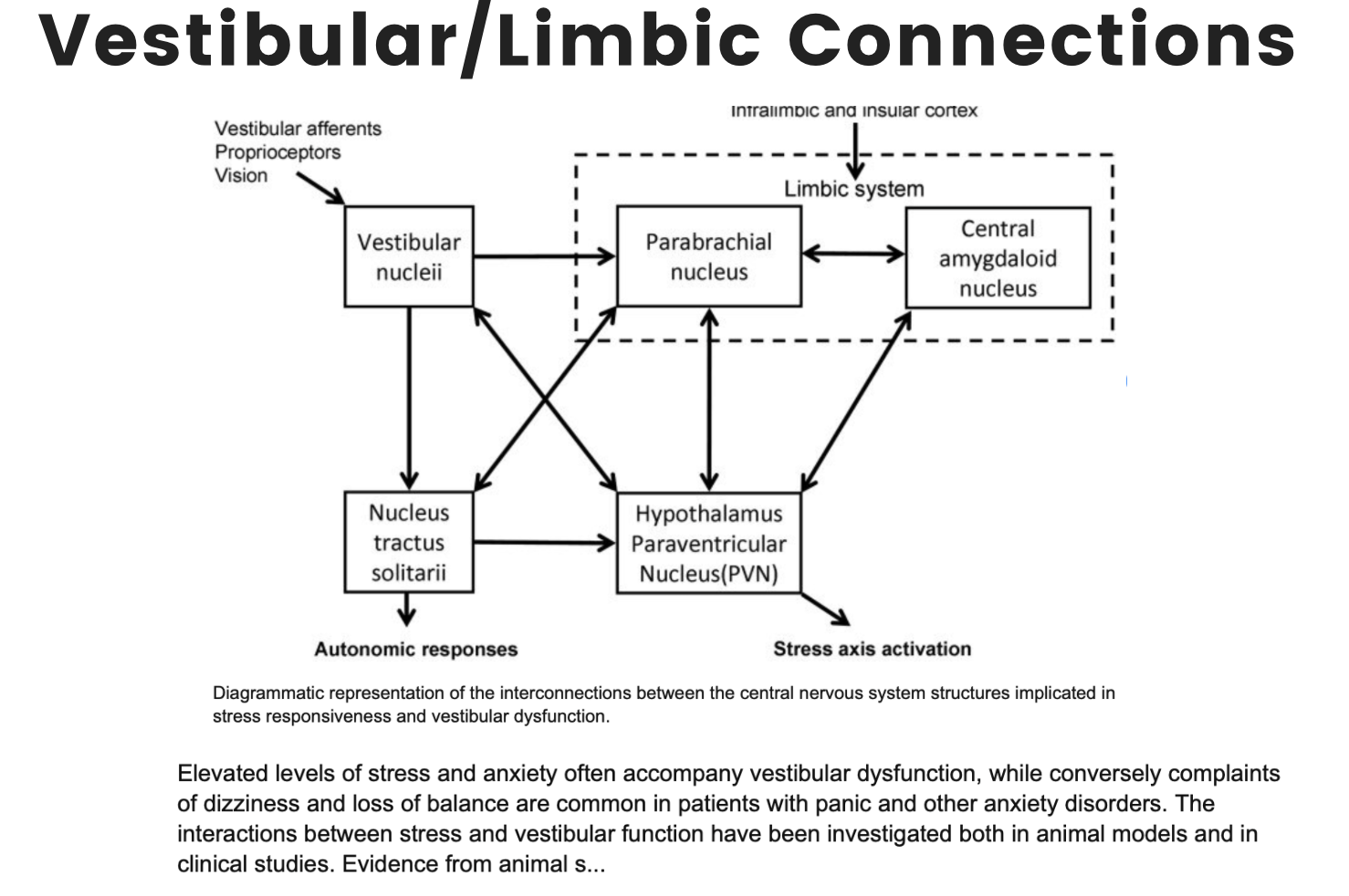
Studies show high prevalence of comorbid anxiety with vestibular disorders. There are extensive neural networks between the vestibular and limbic systems, creating a bidirectional relationship:
Vestibular → Limbic Pathway:
- Sensory input → Vestibular nuclei → Parabrachial nucleus → Amygdala → Hypothalamus/HPA axis
- This creates the emotional response to physical symptoms
Limbic → Vestibular Pathway:
- Emotional state → Altered vestibular processing → Physical symptoms
- Creates "chronic subjective dizziness"
Understanding Chronic Subjective Dizziness
This condition is characterized by:
- Persistent non-vertigo dizziness
- Unsteadiness
- Heightened sensitivity to motion stimuli
- Duration of months to years after precipitating event
Brain Changes Observed:
- Altered connectivity in the insula
- Changes in parietal insular cortex
- Occipital cortex dysfunction
- Anterior cingulate irregularities
These brain structures become hypersensitized, creating a neurological "memory" of symptoms even after the original cause has resolved.
Case Study 3: Extreme Limbic Dominant Vertigo - The Importance of Reducing Input
Patient Profile:
- 40-year-old female
- Severe dizziness from post-concussion syndrome
- Dysautonomia
- Anxiety as primary trigger
- Four car accidents in history
- Survivor of London tube bombings (significant trauma)
- Extensive medical history
Initial Treatment Problems:
- Enrolled in hospital concussion program
- Seeing multiple practitioners simultaneously (physio, exercise physiologist, behavioral optometrist, doing gut protocol, seeing me)
- Result: Massive overstimulation
- Pattern: One step forward, three steps back
What Actually Worked:
- Complete Rest Period - Stopped all therapies for 1-2 months
- Single Practitioner Approach - Resumed only with me
- Systematic Integration:
- Primitive reflexes
- Cranial nerves
- Cervical stability (crucial)
- Emotional release work
- Mindset and belief work
- Lymphatic drainage
- Graded breathwork (CO2 tolerance - after previous negative breathwork experience)
Results:
- Within 2 months: Better than previous 7 years
- Neurology stable
- Then able to resume work with other practitioners from stable baseline
Critical Insight: She didn't believe she'd ever be better again. This belief itself was part of the problem. Addressing the psychological component was as important as the neurological work.
The Clinical Approach for Limbic Dominant Vertigo
When neurology is stable but symptoms persist, shift your focus:
1. Clear Emotional Patterns
If you have training in emotional release techniques, use them. Each emotional release reduces sympathetic load and restores bandwidth. If this isn't in your skillset, refer out - having someone on your team who can do this work is invaluable.
2. Integrate Brain Nuclei
Work on getting different brain regions firing and working together:
- Insula
- Anterior cingulate
- Parietal cortex
- Occipital regions
3. Address Limiting Beliefs & Coaching
Identify language patterns around their condition:
- What do they believe about their symptoms?
- Where did these beliefs come from? (Dr. Google, other practitioners, family)
- What is their conscious goal vs. their nervous system's goal?
My Opening Question:
"What do you want to feel when you walk out that door today? How do you want to feel?"
Patient: "I want to feel better."
"Okay, how would you feel when you feel better?"
Patient: "I'd feel free." (or whatever language they use)
"Great! So that's what you want. My job is to work with your nervous system to see why you can't be in that state in the first place. There are often things in your neurology stopping you from consciously achieving that state."
This setup creates a collaborative framework that helps treatment flow.
Understanding Anxiety-Induced Limbic Vertigo
The Tripwire Effect:
Even when neurology is stable, emotions can act as a tripwire that brings back the entire cascade of symptoms.
How It Works:
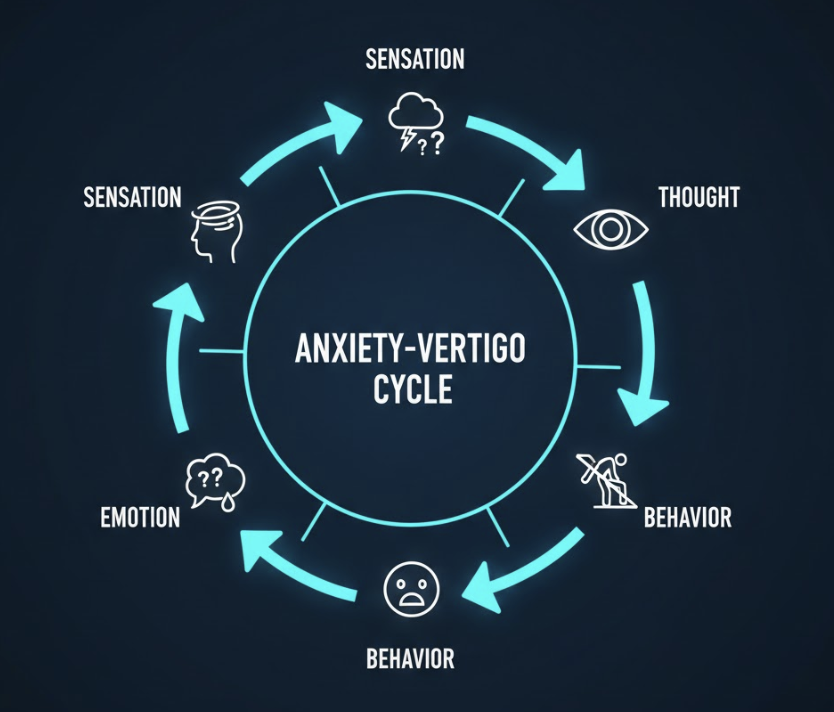
- Neuro-Tagging - The brain tags certain physiological sensations:
- Heightened breathing
- Increased heart rate
- Dizziness sensation
- Visual disturbances
- Neck tightness
- Thought Loop Activation - When tagged sensation occurs:
- Mind perceives threat
- Cascading thought patterns activate
- Associated emotions trigger
- Specific behaviors follow
- Symptom picture returns in full
- Catastrophizing - Common thought patterns:
- "It's come back"
- "I'll never get better"
- "Nothing works"
- "No one can help me"
The Protective Pattern Phenomenon
When we stabilize neurology but symptoms keep returning, the symptom picture has often become a protective patternfor the nervous system.
Key Pillars to Address:
Conscious Retraining of Physiological Responses
Guide patients to awareness:
- "Did you notice you felt it here first?"
- "What emotion was attached to that sensation?"
- "How did you think about that emotion?"
- "Did you want to avoid it? Run from it?"
The Body as Threat
For these patients, normal physiological sensations become perceived threats:
- Heart rate changes
- Breathing patterns
- Movement sensations
- Visual shifts
What's completely normal to someone healthy becomes a trigger for the entire symptom cascade.
Conscious Self-Perception Work
Help them reframe their relationship with their body:
- "Your body isn't unsafe, it's just sensitive right now"
- "That sensation doesn't mean the same thing it used to"
- "We're retraining your nervous system's interpretation"
This is biopsychosocial work layered on top of neurological correction.
Clinical History Questions to Identify the Dominant Type
Use these questions to guide your assessment:
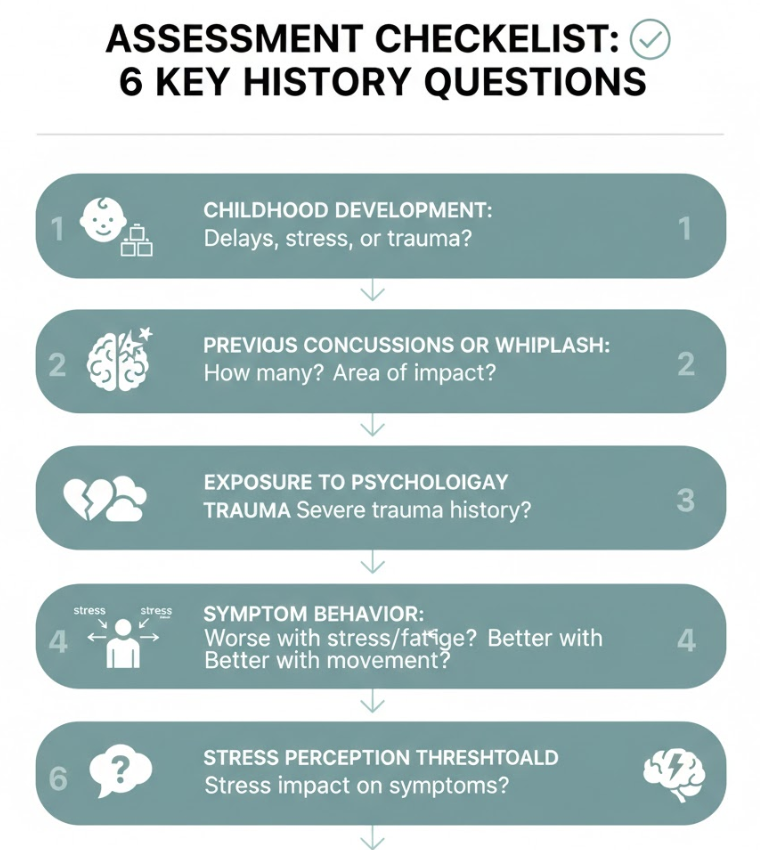
1. Childhood Development
- Interruptions or delays in childhood development?
- Stress or trauma during gestation or first few months?
- Indicator: Retained primitive reflexes create lower baseline threshold to stimuli
2. Previous Concussions or Whiplash
- How many? How close together?
- What was happening in their life at the time of injury?
- Area of impact (determines rehab focus):
- Front-to-back: Frontal and occipital lobes
- Side impact: Temporal and parietal lobes
3. Exposure to Psychological Trauma
- Research shows severe psychological trauma has same physiological effect as concussion
- Earlier and more consistent exposure = more sensitized limbic circuitry
- Indicator: Points to limbic-dominant presentation
4. Symptom Behavior
Worse with stress?
- More stress-sensitive = more likely limbic dominant
Worse with fatigue?
- Neural hierarchy not operating optimally
- May need general system support
Better with movement?
- Need specific afferent inputs
- Requires stability work, joint mobilization, proprioceptive training
5. Belief About Condition
- What stories are they telling themselves?
- Who are they believing?
- Are they consciously overriding their felt sense?
Critical Pattern: Some patients are getting better physiologically (measurable improvements), but can't perceive they've changed. This is identity and belief work territory.
6. Stress Perception Threshold
- How much impact does perceived stress have on symptoms?
- Higher stress impact = more sympathetic/limbic sensitization
The Clinical Flow: My 5-Step Session Structure
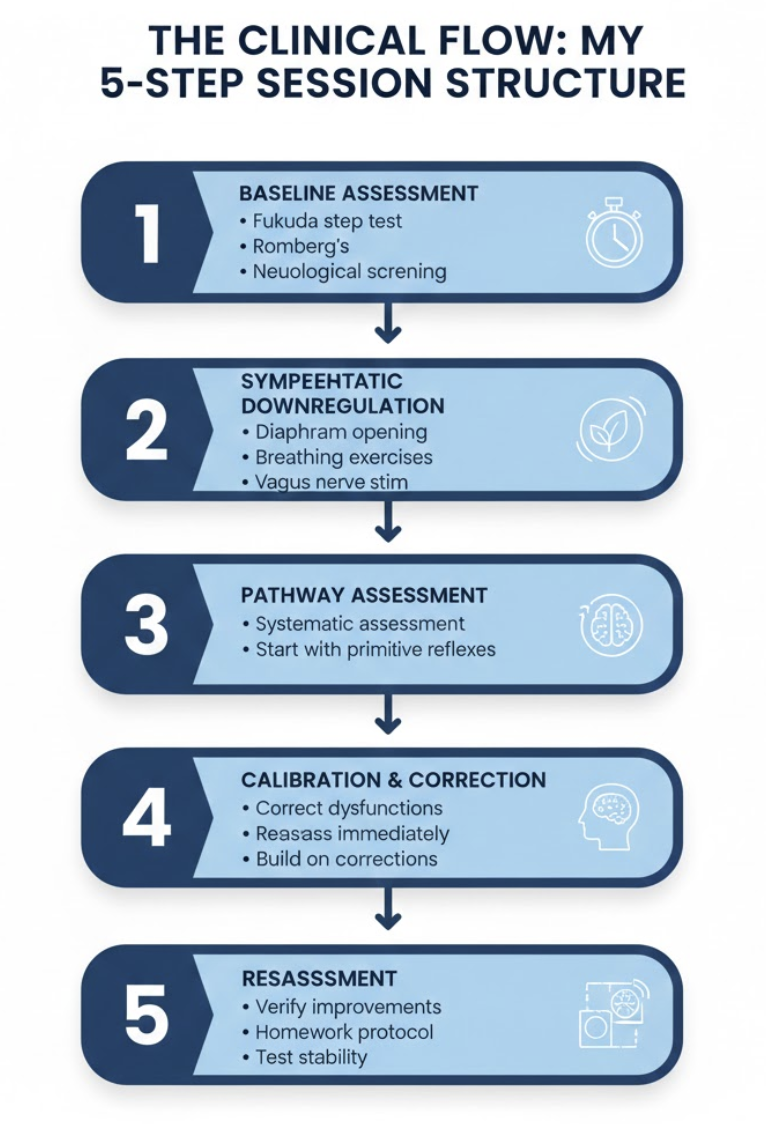
Step 1: Baseline Assessment
- Fukuda step test
- Romberg's
- Comprehensive neurological screening
Step 2: Sympathetic Downregulation
- Critical for sensitive patients
- Manual techniques:
- Gentle rocking (harmonic technique shown to induce parasympathetic response)
- Phrenic nerve release (nerve controlling diaphragm - automatic body reset)
- Diaphragm opening
- Slow breathing exercises
- Vagus nerve stimulation (when appropriate)
Time Allocation: The more sensitive the patient, the more time we spend here (potentially 30+ minutes of a 1-hour session)
Step 3: Pathway Assessment
- Work through systematic assessment sheet
- Start with pathways having most downstream effects on stress system
- Primitive reflexes first (if present, correct them; if not, move on)
Step 4: Calibration and Correction
- Correct identified dysfunctions
- Reassess immediately after each correction
- Build on successful corrections
Step 5: Reassessment
- Verify improvements
- Establish homework protocol
- Test stability before patient leaves
Summary of Approaches by Type
Positional Vertigo
- Integrate vestibular system
- Address cerebellar pathways
- Correct brainstem function
- Primitive reflex (PR) integration
- Cervical stability work
- Eye movement rehabilitation
Expected Timeline: 1-3 sessions for significant improvement
Immune Vertigo
- Vagus nerve stimulation
- Lymphatic system mobilisation
- Glymphatic drainage optimisation
- Viral and bacterial protocols (functional medicine)
- Upper cervical stability (especially C1)
Key Indicator: If immune work is what stabilizes the patient, it's immune-dominant
Limbic Vertigo
- Emotional release techniques
- Limiting belief identification and reframing
- Brain-specific nutrition (targeting neurotransmitters)
- Mindset training
- Brain nuclei integration
- Conscious retraining of physiological responses
Key Principle: Address the processing and perception, not just the input
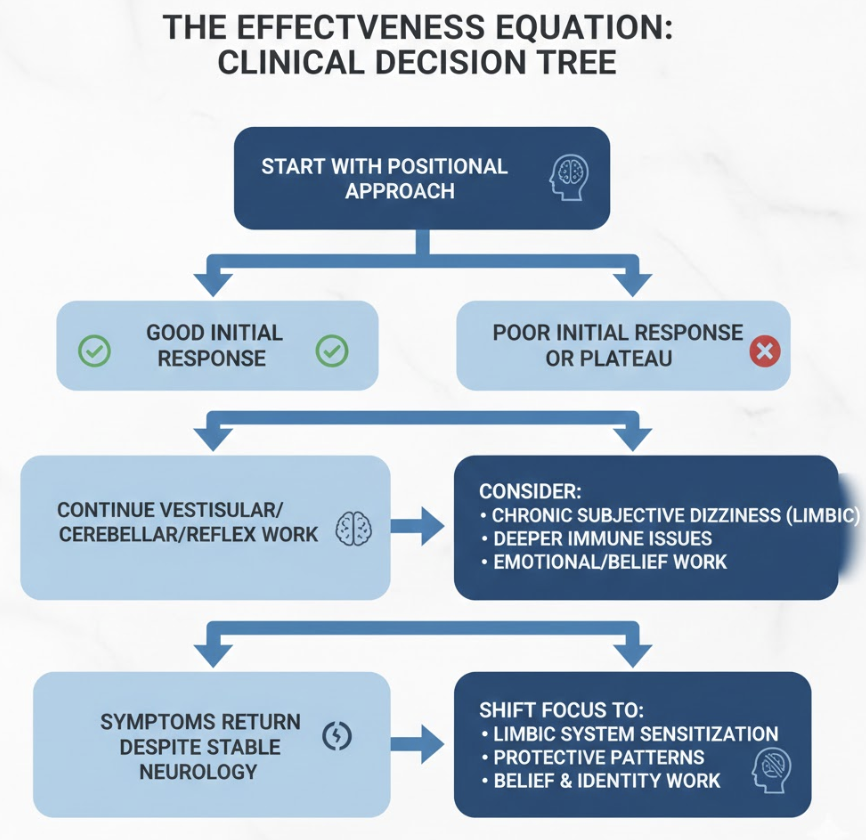
The Effectiveness Equation
The effectiveness of any therapy depends on the basis of the problem and our ability to find it.
Clinical Decision Tree:
- Start with positional approach - This works for the majority and gives quick wins
- If good initial response - Continue with vestibular/cerebellar/reflex work
- If poor initial response or plateau - Consider:
- Chronic subjective dizziness (limbic component)
- Deeper immune issues
- Need for emotional/belief work
- If symptoms return despite stable neurology - Shift focus to:
- Limbic system sensitization
- Protective patterns
- Belief and identity work
Input, Processing, Output: The Big Picture
Understanding the chronic progression:
Acute/Positional Phase:
- Focus: Input (changing sensory information)
- Corrective exercises and rehab drills are highly effective
- Quick results possible
Chronic/Anxiety-Dominant Phase:
- Focus: Processing (how the brain interprets and integrates)
- Emotional layers must be addressed
- Brain nuclei integration essential
- Conscious self-perception work critical
Stabilization Phase:
- Focus: Output (optimizing motor responses)
- Return to input-based drills
- Maintain gains with targeted homework
Important Reminders for Practitioners
Know Your Scope
- If emotional release isn't in your toolkit, build a referral network
- If functional medicine isn't your skillset, have someone on your team
- Multi-disciplinary approach often needed for complex cases
Avoid Overstimulation
- More is not always better
- One practitioner at a time for highly sensitive patients
- Allow nervous system to integrate changes
Listen to Language
- Pay attention to how patients describe themselves
- Their beliefs about their condition matter
- Identity work can be as important as neurological work
Question and Empathise
- Even without advanced training, you can:
- Ask thoughtful questions
- Show genuine empathy
- Help patients understand the difference between conscious goals and nervous system goals
Ready to Master These Techniques?
The approaches I've shared today come from over 10,000 hours of clinical practice and are taught in depth in my training programs.
For Positional and Basic Primitive Reflex Integration: These foundational tools are covered in the Foundations Membership.
First Week FREE, then just $97/week - Get immediate access to:
- Complete primitive reflex assessment and correction protocols
- Vestibular rehabilitation techniques
- Cranial nerve integration methods
- Cervical stability approaches
- Step-by-step session templates
For Advanced Immune and Limbic Work: These advanced techniques are part of the Mastery content for practitioners ready to take their skills to the next level.
Learn More & Connect
Want to dive deeper into functional neurology approaches?
📱 Follow me on Instagram for regular clinical insights and case studies 🌐 Visit functionalneurohealth.com for resources and training options 🎥 Watch my free video training series on functional neuro health principles
Schedule a call if you're interested in learning these methods and we can discuss if the training is right for you.
Final Thoughts
Vertigo is one of the most common complaints you'll see with a functional neurological skillset. With the right framework, you can:
- Get quick wins with positional cases (1-3 sessions)
- Identify when immune factors are driving symptoms
- Recognize limbic sensitization and protective patterns
- Know when to refer and who to collaborate with
Remember: Always start with the positional approach. If that doesn't give you the results you expect, you now have a framework to understand why and what to address next.
The brain-based approach is powerful, but it's the nuances—the primitive reflexes, the emotional layers, the immune components—that will set you apart as a practitioner and get your patients the lasting results they deserve.
This article is based on my presentation at the 2024 Virtual Neurology Summit. The techniques described require proper training and should only be performed by qualified healthcare practitioners.

References & Further Reading
For practitioners interested in the research mentioned:
- Vestibular-limbic network connections and emotional processing
- Chronic subjective dizziness diagnostic criteria
- Primitive reflex integration and neurological development
- Post-concussion syndrome and anxiety comorbidity

Responses